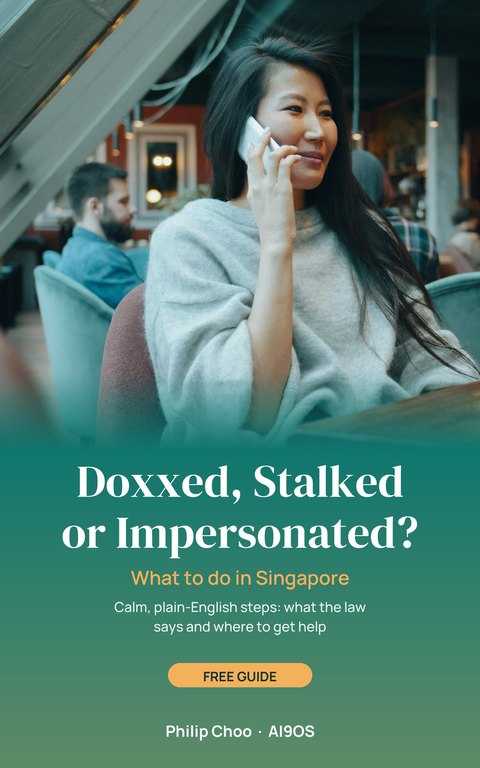
Doxxed, stalked or impersonated? What to do in Singapore
A free guide for anyone whose address has been posted online, who is being harassed or followed, or who has found a fake account using their name or face. Calm, plain-English steps, with the law stated as it stands in October 2026.
Download the PDFEPUB (e-readers)
Free, no sign-up needed. About 40 pages. Share it with anyone who needs it, in full and unaltered.
What the law says about doxxing
In Singapore, doxxing to harass or endanger someone is a crime. "Doxxing" means posting someone's personal details online so that others can find, contact, shame or hurt them. The Protection from Harassment Act 2014 (POHA) covers it in two ways.
- Posting your details to harass you (section 3(1)(c)). It is an offence to publish your "identity information", or that of someone related to you, intending to cause harassment, alarm, distress or humiliation, if it does cause it. The maximum is a $5,000 fine, 6 months in prison, or both.
- Posting your details to put you in danger (section 5(1A)). It is also an offence to publish your identity information intending, or knowing it is likely, to make you fear violence, or to make it easier for others to use violence against you.
"Identity information" is wide. It covers your name, address, phone number, email, NRIC number, photos and videos, and details of your family, job or school. Small pieces that seem harmless on their own count once they are put together to point to you. For the full explanation, including a third offence and where lawful searching ends, read Is doxxing illegal in Singapore?
How to get a doxxing post taken down
Since 29 June 2026 the Online Safety Commission can tell the person who posted, a group admin or the platform to take the post down, stop sharing it, or restrict the account. For doxxing you can go straight to the Commission at report.osc.gov.sg, free; you do not have to report to the platform first. Save your evidence before you report, because the post may disappear once action is taken.
The Commission deals with the post; the courts deal with the person: a Protection Order (POHA section 12), an Expedited Protection Order where there is urgent risk (section 13), and damages (section 11, and since 29 June 2026 a separate claim for doxxing under the Online Safety (Relief and Accountability) Act 2025). The guide explains each step, and what to do when the account is anonymous.
What is inside
- The first 24 hours: stay safe, do not reply, save it before you report it.
- Doxxing: the offences under the Protection from Harassment Act, and going straight to the Online Safety Commission.
- Harassment and bullying: platform first, then the Commission after 24 hours; a section for parents.
- Stalking: what the law covers, protection orders, and keeping yourself safe.
- Someone pretending to be you: fake accounts, fake intimate images, and "pay or I will share it".
- When the account is anonymous: getting the post removed without a name, and asking for the person's identity.
- Scams and getting money back: why frozen is not recovered, and when the bank or telco must pay.
- Where to get help: emergency, reporting and support lines, and how to check an investigator is licensed.
- The latest patterns and what is different in Malaysia.
- A one-page evidence log and three report templates you can copy.
General information, not legal advice. Every legal statement in the guide names the Act and section so that you or your lawyer can check it on Singapore Statutes Online.
Written by Philip Choo, a licensed private investigator in Singapore. If you need licensed help with your own situation, that work is done by Spyrrus Tech Pte Ltd: contact us and choose "Licensed help with a matter".